
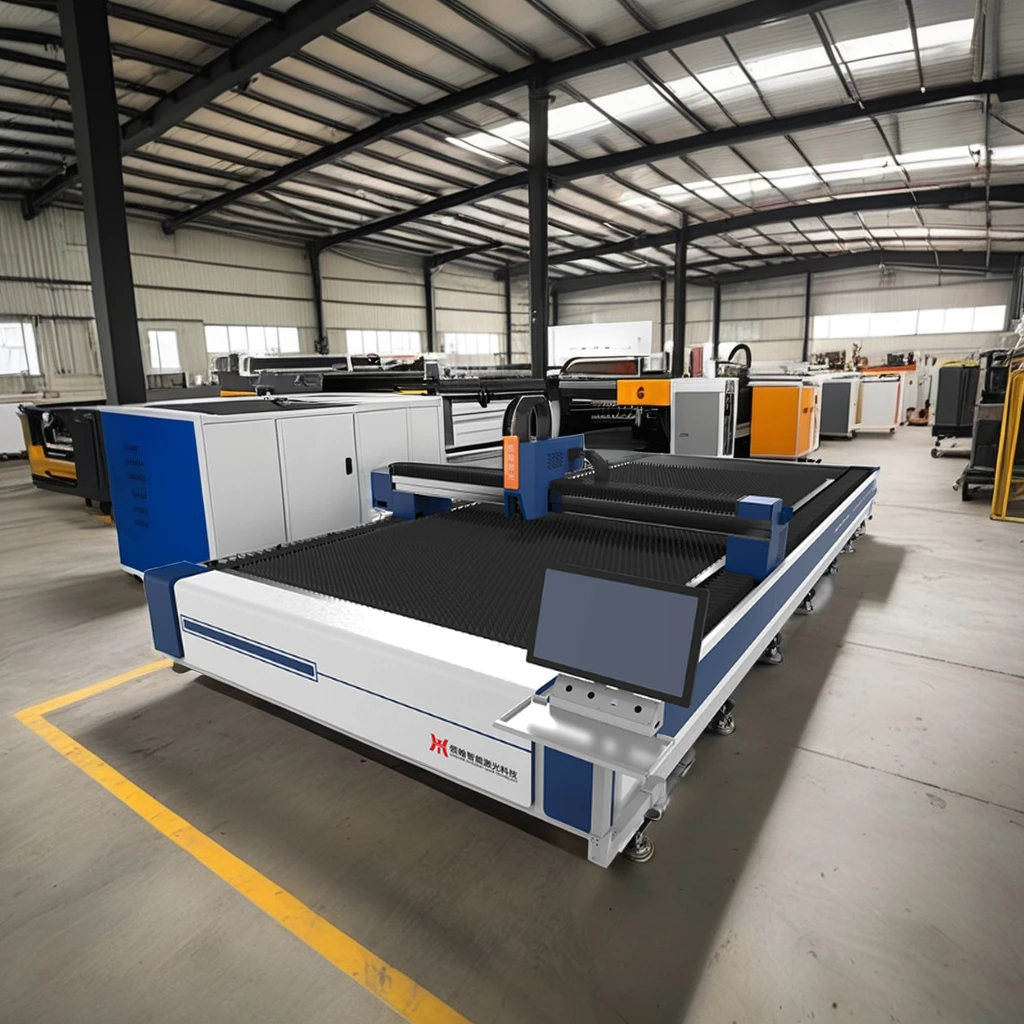
Match Laser Power and Optics to Material Type and Thickness
Selecting the optimal cnc fiber laser cutting machine requires precise alignment between laser specifications and your primary materials. Material thickness and composition directly dictate necessary power levels and optical configurations. For example, steel absorbs laser energy efficiently, while reflective metals like aluminum demand specialized approaches to avoid energy loss.
Selecting the Right Power Range (1000W–30kW) for Your Materials
Power requirements scale with material density and thickness:
- Thin materials (<5mm): 1–3kW lasers achieve clean cuts at high speeds.
- Medium thickness (5–15mm): 4–8kW balances speed and edge quality.
- Heavy plates (>15mm): 6–30kW ensures penetration, often requiring multi-pass strategies.
Material type also influences power: copper alloys need 30%+ higher power than equivalent steel thicknesses due to thermal conductivity.
Cutting Reflective Metals: Overcoming Challenges with Aluminum, Copper, and Stainless Steel
Metals that reflect light tend to bounce back laser energy instead of absorbing it, which can lead to uneven cutting results and even damage to the equipment over time. To deal with this issue, there are several approaches manufacturers commonly use. When working with aluminum materials, many shops switch to pulsed laser settings since these help cut down on reflection problems. The right choice of assist gas makes a big difference too. Most operations will go with nitrogen when cutting stainless steel but switch to oxygen for carbon steel work. Some facilities also apply special anti-reflective coatings to their optical components whenever they're processing copper materials. For thicker aluminum pieces (anything over 5mm), industrial-grade lasers rated at 3kW or higher generally produce cleaner edges without leaving behind unwanted dross. Copper alloys present another challenge altogether. These typically need specialized fiber lasers that operate at specific wavelengths so the material actually absorbs the beam rather than reflecting it away.
Ensure Precision and Process Stability Through Core System Integration
Laser Source Quality, Beam Delivery, and Optical Alignment Impact on Cut Accuracy
Getting good results from CNC fiber laser cutting depends on three main factors working together properly: stable laser source, reliable beam delivery, and correct optical alignment. The laser itself needs to keep its power steady within about 2% variation if we want clean edges and accurate dimensions on our parts. For the beam delivery system, having a solid frame is really important because vibrations can throw things off track. Most shops need to stay within 0.05mm accuracy during those long 8 hour production runs. Then there are the optics like lenses and mirrors that just cannot have any dirt or particles on them. Believe it or not, something as tiny as 0.1 microns of dust buildup will actually scatter around 15% of the laser's energy according to recent industry standards. That's why regular calibration checks with interferometers matter so much. These checks catch when the focal point starts drifting, which tends to create inconsistent kerf widths especially when working with thin metal sheets.
CNC Control Systems Compared: Nesting Efficiency and Real-Time Diagnostics
The way control systems work really affects how efficient operations are, thanks to those fancy nesting algorithms and built-in diagnostics. The best platforms out there actually improve material usage because they can adjust how parts are oriented on the fly. Some shops report cutting down on scrap materials by around 15 to 20% compared to older software versions. When it comes to real time monitoring, these systems keep an eye on important stuff like gas pressure levels, nozzle temps, and focal lengths too. If something goes off track beyond what's acceptable, the system automatically makes adjustments before problems get worse. There's also machine learning integration now where systems look at past cutting data to figure out when maintenance might be needed next, which cuts down unexpected shutdowns by about a third according to manufacturers. And for those tricky shapes and designs, there are special collision avoidance features that will actually change tool paths mid-process whenever sensors pick up any sheet metal warping issues during production runs.
Align Machine Configuration with Your Production Workflow and Part Geometry
Sheet Metal, Tube, or Hybrid CNC Fiber Laser Cutting Machine – Which Fits Your Volume and Complexity?
The choice between sheet metal, tube, or hybrid configurations makes all the difference when it comes to production speed and final product quality. For shops running high volumes of flat sheets, investing in dedicated sheet metal machinery pays off big time. These machines are built for speed and efficient nesting, making them ideal for those repetitive 2D shapes that come up so often in manufacturing. On the flip side, companies working with structural parts like square or round tubes need something different entirely. Specialized tube cutting equipment with those rotating axes becomes essential for getting those circular cuts right and tackling those tricky angles that just won't work on regular sheet metal setups.
In shops that handle multiple production tasks, hybrid CNC fiber laser cutters bring something special to the table by merging different functions into one machine, even if they do cost about 20 to 35 percent more than standard models. When looking at part design specifics, shops find that working with parts that need bending or flanging after cutting works much better with these machines because everything stays automated. Shops dealing with lots of different products have noticed their changeover times drop anywhere from 15% to maybe around 30% quicker when moving back and forth between sheet metal work and tubing projects on these hybrid systems.
Take a close look at how many parts get made each year. When production runs hit around 5,000 pieces or more per year, dedicated machines start making financial sense because they cut down on the cost per individual part. For smaller batches below 2,000 units though, hybrid setups often work better since they minimize the downtime between jobs and reduce the need for constant reconfiguration. The numbers back this up too Fabrication Quarterly reported last year that when machines aren't properly matched to their tasks, scrap rates jump anywhere from 8 to 12 percent simply because everything doesn't line up right. So instead of trying to plan for every possible situation, focus on what actually happens most days in the shop. Getting this alignment right prevents spending money on equipment that's either too powerful or not powerful enough for daily operations.
Evaluate Total Cost of Ownership: Safety, Service Support, and Long-Term Reliability
Critical Built-in Safety Features and Automation Add-Ons (Auto-Loading, Fume Extraction, Robotics)
Safety systems built into operations cut down on both risks during day to day work and overall costs for businesses. When auto loading modules are installed, they take care of moving materials manually which means fewer injuries happen around the shop floor plus things get done faster. Fume extraction systems that are fully enclosed help keep the air clean where it matters most, saving companies from having to spend upwards of eighty five thousand dollars each year on fixing ventilation problems. Robots integrated into production lines allow factories to run even when nobody's there at night time, increasing how much equipment gets used by somewhere between twenty and thirty percent according to industry data. The Ponemon Institute found back in 2023 that every single workplace accident costs about seven hundred forty thousand bucks for manufacturers. Looking ahead, smart planning around automation pays off over time because there's less need for workers doing repetitive tasks, fines from regulators drop off significantly, and those extra containment systems that sit unused just disappear from the budget altogether.
| Feature | Cost Impact | Reliability Benefit |
|---|---|---|
| Robotic part handling | 15–25% faster changeovers | Consistent precision (±0.1mm) |
| Automated fume control | Avoids $50k/yr filtration upgrades | Prevents corrosion damage |
| Safety interlocks | 85% reduction in operational incidents | Continuous production uptime |
Vendor Due Diligence: Factory Audits, Installation Support, and Operator Training for CNC Fiber Laser Cutting Machine Users
A good look at potential vendors can stop around 43 percent of those surprise costs that pop up over time. When companies send people to check out factories firsthand, they get a much better idea about how components are made and whether assembly meets proper standards. Training operators properly makes a huge difference too - studies show it cuts down on setup mistakes by roughly 35% within the first twelve months alone. Look for suppliers who offer actual on site commissioning along with detailed calibration reports. Technical support should be readily available when problems arise, not just promised but delivered consistently. Certification programs focused on specific materials matter as well because different materials behave differently under laser cutting conditions. All these factors combined help machines last longer and perform at their best level throughout their service life in CNC fiber laser cutting operations.
FAQs about CNC Fiber Laser Cutting Machines
What are the key factors to consider when choosing a CNC fiber laser cutting machine?
When selecting a CNC fiber laser cutting machine, consider materials you're working with, their thickness, required power levels and optical configurations, machine configuration (sheet metal, tube, or hybrid), and the overall cost of ownership, which includes safety features and service support.
What power range is suitable for different material thicknesses?
Thin materials under 5mm typically require 1–3kW lasers, medium thickness (5–15mm) materials require 4–8kW, and materials over 15mm need 6–30kW considering the material's density.
How can reflective metals like aluminum and copper be cut effectively?
For reflective metals, employ pulsed laser settings, choose appropriate assist gases, or use anti-reflective coatings on optics specifically for aluminum, copper, and stainless steel to improve cutting efficiency.
Why is machine configuration important for production speed and quality?
The choice between sheet metal, tube, or hybrid setups greatly affects production speed and quality. Dedicated systems match production needs, enhancing efficiency and reducing waste, while hybrids offer versatility across varied tasks.
What safety features are crucial in a CNC fiber laser cutting machine?
Essential safety features include automation add-ons like auto-loading, fume extraction, and robotics, which improve safety and reduce costs by preventing manual handling injuries and keeping the environment clean.
Table of Contents
- Match Laser Power and Optics to Material Type and Thickness
- Ensure Precision and Process Stability Through Core System Integration
- Align Machine Configuration with Your Production Workflow and Part Geometry
- Evaluate Total Cost of Ownership: Safety, Service Support, and Long-Term Reliability
- FAQs about CNC Fiber Laser Cutting Machines