
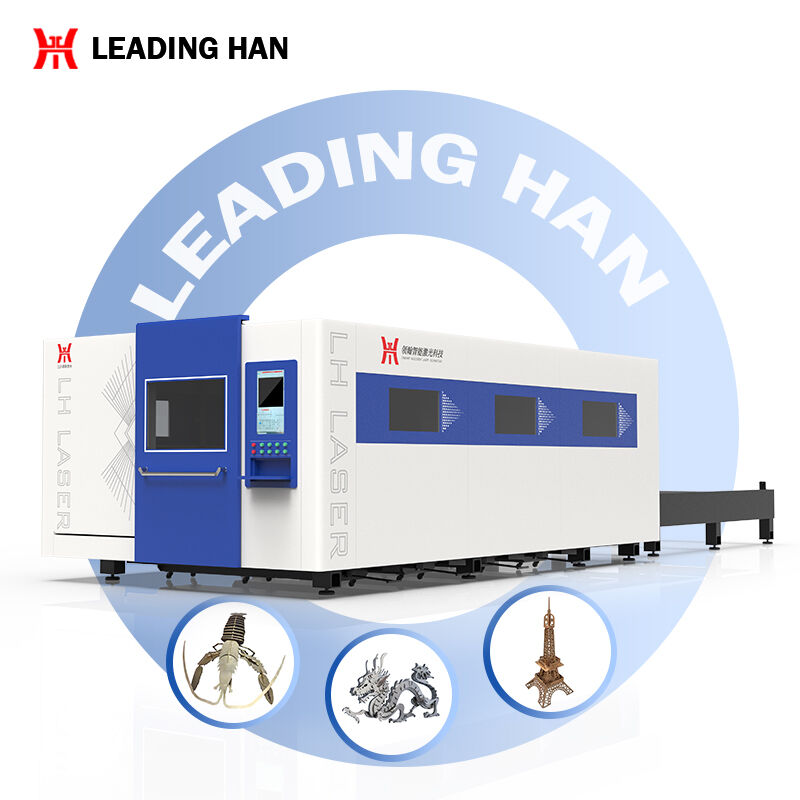
Understanding the Capabilities of a 3KW Fiber Laser Cutting Machine
What defines the cutting capability of a 3KW fiber laser cutting machine
Three factors determine a 3KW fiber laser's effectiveness:
- Beam quality (measured by M² value <1.2 for optimal focus)
- Assist gas selection (oxygen for carbon steel, nitrogen for stainless steel/aluminum)
- Material reflectivity (requires wavelength tuning for copper/brass)
Recent studies show 3KW lasers achieve 20% faster pierce times than 2KW systems when cutting 15mm carbon steel (Laser Processing Journal, 2023).
How thick can a 3KW fiber laser cut across different materials
| Material | Max Thickness | Cut Quality | Ideal Assist Gas |
|---|---|---|---|
| Carbon Steel | 15mm | Clean edges | Oxygen |
| Stainless Steel | 12mm | Oxide-free | Nitrogen |
| Aluminum | 8mm | Minimal dross | Nitrogen |
Data from 2024 Industrial Laser Report shows 3KW systems process 12mm stainless 23% faster than equivalent plasma cutters.
Performance benchmarks for 3KW laser power in metal cutting
- Carbon Steel: 15mm at 1.8m/min (ISO 9013 quality standard)
- Stainless Steel: 10mm at 2.4m/min with ±0.1mm precision
- Aluminum: 6mm sheets at 3m/min (50% faster than CO₂ lasers)
Comparison of 3KW vs. higher-power lasers in thick-plate processing
While 6KW lasers cut 25mm carbon steel 40% faster, 3KW systems offer better ROI for materials under 15mm, with operational costs at $0.12/ft versus $0.21/ft for higher-power units. For shops processing mixed batches (70% under 12mm), 3KW delivers 93% uptime compared to 87% for high-power lasers due to simpler maintenance (Precision Manufacturing Review, 2023).
Cutting Performance on Carbon Steel, Stainless Steel, and Non-Ferrous Metals
Maximum Cutting Thickness for Carbon Steel: Up to 15mm with Clean Edges
A 3KW fiber laser achieves optimal performance on carbon steel using oxygen-assisted combustion, cutting 12–15mm plates at 0.7–1.2 m/min with ±0.1mm dimensional accuracy. The exothermic reaction enhances energy efficiency, enabling full penetration while maintaining Ra 6.3 µm surface roughness—critical for welded structural components.
Stainless Steel Cutting Performance: Reliable Results Up to 12mm
High-pressure nitrogen (1.8–2.2 bar) prevents oxidation during stainless steel cutting, preserving corrosion resistance in applications like marine hardware. Cutting speeds range from 0.4–0.8 m/min for 8–12mm grades. A Material Flexibility Study found nitrogen reduces edge chromium depletion by 60% compared to oxygen, ensuring long-term durability.
Aluminum and Copper Processing: Overcoming Reflectivity Challenges at 3kw
Non-ferrous metals require specialized parameters due to high thermal conductivity and reflectivity:
- Pulse modulation (10–20 kHz) minimizes back-reflection risks
- Helium-nitrogen blends reduce plasma shielding in copper
- Absorption coatings improve coupling efficiency for 8mm aluminum cuts
| Material | Cutting Speed (12mm) | Edge Angle Tolerance |
|---|---|---|
| Carbon Steel | 1.0 m/min | ±1.2° |
| Stainless | 0.6 m/min | ±1.5° |
| Aluminum | 0.9 m/min | ±2.0° |
Cutting Speed Comparison Across Carbon Steel, Stainless Steel, and Aluminum
Carbon steel benefits from exothermic energy input, achieving superior speed-to-depth ratios. Aluminum requires 18% higher energy density due to rapid heat dissipation. Modern 3KW systems use adaptive power curves to maintain ±3% speed consistency across material batches, balancing productivity and edge quality.
Key Factors Influencing Cutting Efficiency and Precision in 3KW Systems
Material type, laser power, and assist gas: How they impact cut quality
Material dictates assist gas and parameter selection. Oxygen enables clean 15mm carbon steel cuts at 0.8 m/min, while nitrogen ensures oxide-free edges on stainless steel up to 12mm. For aluminum, nitrogen at 16–20 bar improves edge quality by 35% over compressed air, as confirmed in 2024 Industrial Laser Report findings.
Beam quality and focus control for consistent thick-plate penetration
A beam quality factor (M²) ±1.8 mm-mrad allows 3KW lasers to maintain kerf widths under 0.1mm even at maximum thickness. Dynamic focus control (±0.05mm precision) compensates for plate warping, reducing scrap rates by 18% in shipbuilding applications where flatness varies up to 2mm/m².
Optimizing cutting speed and nozzle design for industrial throughput
Efficient cutting requires matching process parameters to material:
- Nozzle diameter: 2.5mm for 10–15mm steel
- Speed reduction: 40% when moving from 8mm to 15mm plates
- Adaptive motion algorithms to minimize corner defects
Production-grade 15mm carbon steel cutting stabilizes at 0.8 m/min, though high-pressure pre-flow assist systems improve pierce cycles by 22%.
Can a 3kw fiber laser reliably cut 15mm plates at production speeds?
Yes, provided key parameters are optimized:
- Pulse frequency between 500–800Hz
- Oxygen purity exceeding 99.95%
- Comprehensive piercing libraries with 200+ material presets
However, daily cutting of plates over 12mm increases maintenance demands, requiring weekly lens inspections and monthly window replacements to sustain <±0.05mm positional accuracy.
Industrial Applications and Advantages of 3KW Fiber Laser Plate Cutting Machines
Widespread use in shipbuilding, construction, and heavy machinery fabrication
The 3KW fiber laser has become pretty much standard equipment across many manufacturing sectors where strong yet accurate cuts matter most. Shipbuilding companies rely on these lasers when working with 15mm thick carbon steel for hull parts and structural reinforcements. Construction firms find them invaluable too, especially when dealing with stainless steel I-beams ranging from 8 to 12mm thickness. These machines can cut those beams and support brackets with incredible precision, staying within just 0.1mm tolerance. For heavy machinery producers, the real advantage lies in the clean edges produced during cuts for things like hydraulic system components and vehicle frames. We're talking about cutting speeds around 3 to 5 meters per minute according to recent industry data from the 2024 Industrial Machinery Report. That kind of performance makes a big difference in production efficiency.
Balancing cost-efficiency and performance in mid-power laser adoption
According to a 2023 Laser Systems Journal analysis, 3KW systems reduce operational costs by 22% compared to 6KW models while delivering 85% of their performance on sub-12mm materials. Key savings include:
- 40% lower electricity consumption than 4–6KW systems
- 50% faster ROI over plasma cutting in mixed-material environments
- 18–20% reduction in nitrogen usage during stainless steel processing
Material flexibility and long-term ROI of 3kw systems in B2B manufacturing
The machines can work with carbon steel materials as thick as 15mm, stainless steel at around 12mm, and aluminum pieces up to 8mm all without needing any tools swapped out, which cuts down on those annoying changeover breaks. According to a survey among fabricators back in 2022, shops saw about half the number of production hiccups once they upgraded their setup to 3KW laser systems for handling multiple material types. Shop floor workers have been reporting roughly 30 percent better machine usage rates compared to older CO2 systems, particularly noticeable when moving from shiny metals like copper to regular iron-based alloys throughout the day.
Future trends: Growing role of 3kw fiber lasers in precision thick-plate cutting
Advancements in automated nesting software have increased material utilization to 94%—a 15% gain since 2020. Emerging applications include:
- Tiered cutting of 12–15mm structural parts for modular buildings
- Hybrid cells integrating 3KW lasers with robotic welding
- Compact, mobile 3KW units for offshore energy projects
Industry forecasts predict a 35% rise in 3KW laser adoption by 2027, driven by adaptive beam control for tapered and beveled edge cutting.
FAQ Section
What materials can a 3KW fiber laser cutting machine handle?
A 3KW fiber laser can efficiently cut carbon steel up to 15mm thick, stainless steel up to 12mm, and aluminum up to 8mm.
Is a 3KW laser suitable for industrial applications?
Yes, 3KW fiber lasers are widely used in industrial sectors such as shipbuilding, construction, and heavy machinery fabrication due to their precision and efficiency.
How does the cost-efficiency compare between 3KW and higher-power lasers?
3KW systems are 22% more cost-efficient than 6KW models, making them a better ROI choice for materials under 15mm.
What assist gases are suitable for different materials?
For carbon steel, use oxygen; for stainless steel and aluminum, nitrogen is recommended.
Table of Contents
- Understanding the Capabilities of a 3KW Fiber Laser Cutting Machine
- Cutting Performance on Carbon Steel, Stainless Steel, and Non-Ferrous Metals
- Key Factors Influencing Cutting Efficiency and Precision in 3KW Systems
-
Industrial Applications and Advantages of 3KW Fiber Laser Plate Cutting Machines
- Widespread use in shipbuilding, construction, and heavy machinery fabrication
- Balancing cost-efficiency and performance in mid-power laser adoption
- Material flexibility and long-term ROI of 3kw systems in B2B manufacturing
- Future trends: Growing role of 3kw fiber lasers in precision thick-plate cutting
- FAQ Section