
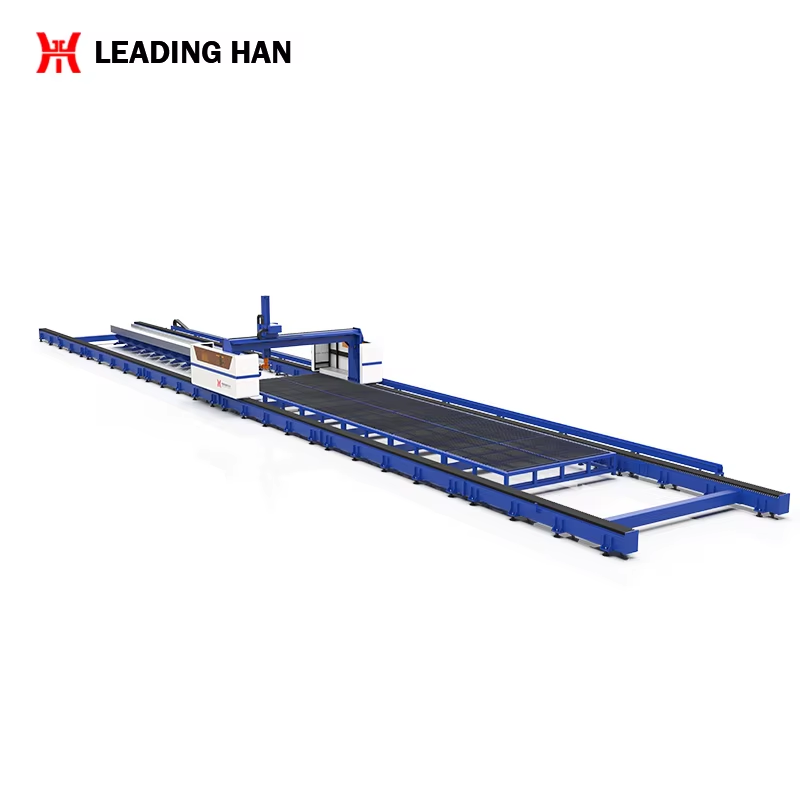
How Fiber Laser Power Affects Thick-Wall Tube Cutting Performance
Most CNC laser tube cutters depend on fiber lasers for cutting through those tough wall thicknesses. When we talk about higher wattage lasers, they basically pack more punch, concentrating their energy so they can melt right through dense metal sheets. The real deal here is power density, which basically tells us what's the thickest material our machine can handle before it starts struggling. A recent report out there somewhere (probably from the Material Processing Institute in 2024) shows something pretty interesting though. Boosting laser power from just 3 kilowatts all the way up to 12 kilowatts gives manufacturers around triple the cutting capability when working with mild steel. That kind of jump makes a huge difference in shop floor operations.
Principle: Why Higher Wattage Enables Thicker Material Cuts
Fiber lasers work by turning electricity into concentrated light energy, which we measure in watts per square millimeter. When these lasers operate at higher power levels, say above 6 kilowatts, they create incredibly intense beams with power densities over 10 million watts per square centimeter. That kind of intensity can actually melt through carbon steel sheets as thick as 30 millimeters in one go. What does this mean for manufacturing? It allows for clean cuts in a single pass without needing any additional polishing or finishing steps. Production times drop significantly too, around 40 percent faster than what's possible with traditional plasma cutting techniques according to industry reports.
Comparison of 3kW, 6kW, and 12kW+ Lasers for Industrial Tube Processing
| Laser Power | Mild Steel (mm) | Stainless Steel (mm) | Aluminum (mm) |
|---|---|---|---|
| 3kW | 20 | 12 | 8 |
| 6kW | 35 | 25 | 15 |
| 12kW+ | 50 | 40 | 25 |
Higher-powered systems offer exponential speed gains in mid-range thicknesses. For example, while a 3kW laser cuts 10mm carbon steel at 3.2m/min, a 12kW machine achieves 8.5m/min—a 165% increase in productivity.
Diminishing Returns Beyond 12kW: Practical Limits in Real-World Applications
While lasers above 20kW do exist on paper, most shops run into serious issues once they go past around 12kW power levels. The cooling system needs jump by about 35%, which isn't just expensive but takes up much more space too. Running costs don't scale linearly either – a 12kW machine might pull about 18.5kWh while its bigger cousin at 20kW eats through 25kWh instead. And then there's the cutting quality problem where the plasma clouds start messing things up when using oxygen assistance methods. For tube work specifically, many fabricators have settled on the sweet spot between 6kW and 12kW range for their operations. These machines handle materials up to roughly 40mm thickness without breaking the bank, giving decent speeds while keeping those electricity bills from spiraling out of control. Sure, some specialized jobs might need higher power, but for general fabrication work this mid-range remains the industry standard.
Material Thickness Capacity and Cut Quality in CNC Laser Tube Cutters
Maximum Thickness Limits by Material: Stainless Steel, Carbon Steel, and Aluminum
The cutting capacity of CNC laser tube cutters changes depending on what material is being worked with and how powerful the laser system happens to be. When dealing with stainless steel, most 6kW fiber lasers can handle clean cuts through materials around 18mm thick. The bigger 12kW and above systems push this limit out to about 30mm in actual shop floor conditions. Carbon steel works differently since it actually soaks up laser energy better. This means even basic 6kW machines can tackle 25mm wall thicknesses moving at impressive speeds sometimes reaching 45 meters per minute. Aluminum poses quite another problem altogether because of its reflective surface and tendency to conduct heat away quickly. Even when using those heavy duty 12kW lasers, operators generally struggle to get past 20mm depth without needing some sort of post processing work to finish off rough edges.
| Material | 3kW Laser Capacity | 6kW Laser Capacity | 12kW Laser Capacity |
|---|---|---|---|
| Stainless Steel | 6mm | 18mm | 30mm |
| Carbon Steel | 12mm | 25mm | 40mm |
| Aluminum | 8mm | 15mm | 20mm |
Key Factors Influencing Cut Precision at High Thickness Levels
Three critical elements determine edge quality in thick-walled tube processing: assist gas dynamics (oxygen vs. nitrogen for oxidation control), beam focal length adjustments for deeper penetration, and adaptive feed rate algorithms that compensate for thermal warping during extended cuts.
Case Study: 6kW Fiber Laser Successfully Cuts 30mm Stainless Steel Tube
In early 2023, a manufacturing experiment showed what happens when advanced cutting head calibration gets applied to regular 6kW fiber lasers. These machines managed to slice through 30mm thick stainless steel tubes something most would consider impossible at that power level. The trick was adjusting nitrogen pressure on the fly while slowing down the cutting speed to around 12 meters per minute. With these tweaks, the operators kept measurements within just 0.1mm tolerance across all 500 test pieces they made. That's pretty impressive since it actually went beyond normal capabilities by nearly two thirds thanks to those parameter changes. Nobody expected such good results from what started as just another routine test run.
Fiber vs CO2 Laser Technology for Heavy-Duty Tube Cutting
Advantages of Fiber Lasers in Thick-Wall Metal Processing
When it comes to industrial tube cutting applications, fiber lasers generally beat out traditional CO2 systems because they operate at around 1.06 microns wavelength. This means metals such as carbon steel and stainless steel actually absorb about 30 percent more energy from these lasers compared to CO2 alternatives. The difference is pretty significant in practice too. For instance, when working with 15mm stainless steel tubes, a standard 6kW fiber laser can complete the job roughly 18% quicker than what would be possible with a similarly powered CO2 system. Another big advantage lies in reliability factors. Fiber lasers don't require those complicated mirror arrangements found in CO2 units nor do they need regular refilling of expensive gases. These design differences translate into impressive uptime figures of approximately 92% for fiber systems against just 76% for CO2 models during extended periods of operation in busy manufacturing settings.
Why CO2 Lasers Struggle with High-Thickness Industrial Applications
When working with materials thicker than 12mm, CO2 lasers tend to lose around 40 to 50 percent of their efficiency because the beam spreads out more and heat gets lost along the way. The 10.6 micrometer wavelength these lasers use creates all sorts of problems for cutting through thick walls. Getting the beam properly conditioned becomes a real headache, and this leads to alignment issues that are roughly three times worse than what we see with fiber optic systems. And let's not forget about the running costs either. These machines guzzle gas at a rate that adds anywhere from $18 to $22 every single hour during non-stop operation. That kind of expense makes CO2 lasers pretty tough to justify for factories doing large volume work where cost matters most.
Reflective Materials Challenge: Aluminum and Copper in High-Power Cutting
When working with aluminum, fiber lasers cut down reflectivity issues by around two thirds thanks to their pulsed operation mode. This makes them great for cutting 6061-T6 alloy sheets as thick as 20mm without problems. On the flip side, traditional CO2 laser systems need special anti reflective coatings applied to copper tubing when dealing with anything over 8mm thickness. Getting those coatings applied adds roughly between four dollars fifty cents and six dollars seventy five cents extra per meter of material being processed. Looking at recent research findings, fiber lasers stay within plus or minus 0.15mm accuracy when cutting 25mm aluminum tubes. That's pretty impressive compared to CO2 systems which tend to drift around by about 0.38mm under similar circumstances. The difference might seem small but it really matters when precision is critical for manufacturing quality parts.
Matching CNC Laser Tube Cutters to Industrial Production Needs
Trend: Shift Toward High-Power Lasers in Modern Metal Fabrication
Since around 2020, there's been quite a jump in installation of those high power CNC laser tube cutters across metal fabrication shops nationwide. The main reason? Fabricators want to get things done quicker and handle thicker materials without breaking a sweat. Most shops are going for machines rated between 6kW to 12kW these days. These bad boys can slice through carbon steel tubes as thick as 30mm, cutting at speeds roughly double what older 3kW models managed back in the day. Shops using this newer tech are seeing about a quarter reduction in secondary operations because the edges come out so much cleaner with these fiber lasers. Makes sense when you think about it saving both time and money on post processing work.
Strategy: Aligning Laser Power with Material Type, Thickness, and Output Goals
Industrial users achieve optimal results by matching laser parameters to three core factors:
| Material | Recommended Power | Max Thickness (mm) | Cut Speed (m/min) |
|---|---|---|---|
| Mild Steel | 6kW | 25 | 4.2 |
| Stainless Steel | 8kW | 20 | 3.1 |
| Aluminum | 10kW | 15 | 6.7 |
For high-mix production, configurable systems with real-time power adjustments reduce material waste by 18% while maintaining ±0.1mm precision. Industry experts emphasize selecting multi-mode lasers that seamlessly adapt between thin-wall and heavy-section cutting tasks.
Rising Demand for High-Capacity Cutting in Heavy Industries
The energy and construction industries together take in around two-thirds of all high power CNC laser tube cutters sold worldwide. Why? Because these sectors need to handle specific materials that regular equipment just can't manage. Take offshore oil platforms for instance they require processing API 5L grade steel pipes over 40mm thick. Nuclear plants meanwhile demand work on 316L stainless steel conduits that regular cutting methods struggle with. A real world example comes from a major shipbuilding company which managed to run their production line non stop after switching from plasma cutting to a 15kW fiber laser system. They were able to cut through 35mm thick marine exhaust stacks continuously, and saw their cutting costs drop by about $220 per unit in the process. Makes sense when you think about it the right tool for the job saves money in the long run.
FAQ
What is the advantage of using fiber lasers over CO2 lasers for thick-wall tube cutting?
Fiber lasers operate at a shorter wavelength, allowing metals to absorb 30% more energy compared to CO2 lasers, resulting in faster and cleaner cuts. They are more reliable, do not require complex mirror arrangements, and have lower running costs.
Why do higher wattage fiber lasers enable cutting of thicker materials?
Higher wattage fiber lasers generate higher power density, which allows them to melt through thicker materials more efficiently, enabling single-pass cutting and reducing production time significantly.
What are the practical limits of laser power for real-world applications?
While lasers above 20kW exist, practical issues such as increased cooling needs and higher running costs make them less feasible. Most industries find that sticking to the 6kW to 12kW range provides the best performance without incurring excessive costs.
How do material type and laser power influence cutting thickness?
Cutting capacity varies with material and laser power. For example, 6kW lasers handle up to 25mm of carbon steel efficiently, while 12kW lasers extend this capacity to 40mm. Aluminum's reflective nature poses additional challenges, limiting thickness capabilities compared to steel.
Table of Contents
- How Fiber Laser Power Affects Thick-Wall Tube Cutting Performance
- Material Thickness Capacity and Cut Quality in CNC Laser Tube Cutters
- Fiber vs CO2 Laser Technology for Heavy-Duty Tube Cutting
- Matching CNC Laser Tube Cutters to Industrial Production Needs
-
FAQ
- What is the advantage of using fiber lasers over CO2 lasers for thick-wall tube cutting?
- Why do higher wattage fiber lasers enable cutting of thicker materials?
- What are the practical limits of laser power for real-world applications?
- How do material type and laser power influence cutting thickness?