
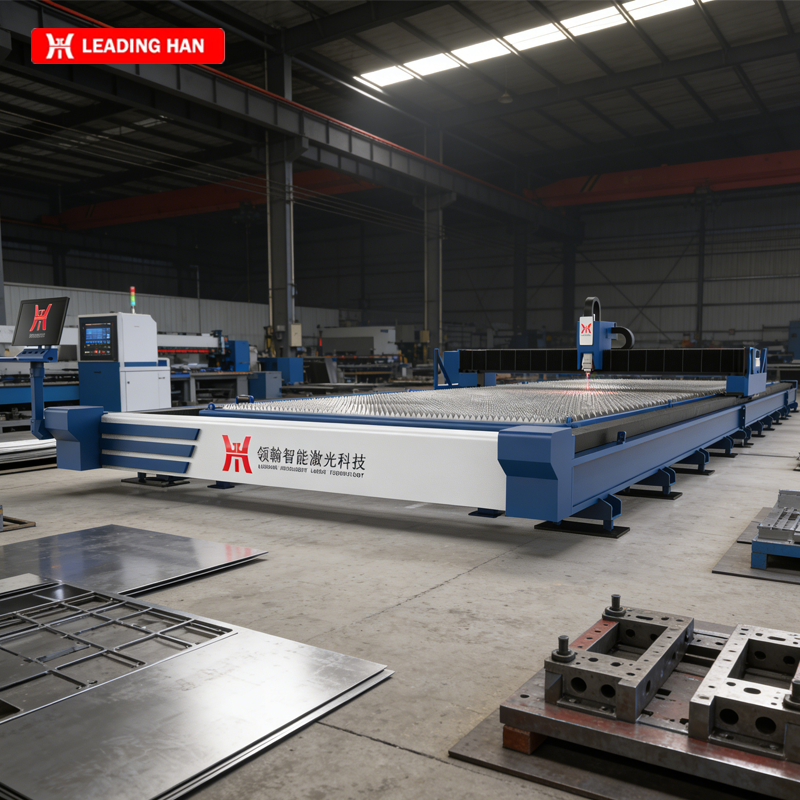
How a 3kW Fiber Laser Plate Cutting Machine Delivers Industrial-Grade Precision and Speed
Core Technical Advantages: Beam Quality, Power Stability, and Dynamic Acceleration
When it comes to industrial precision, there are basically three technical factors that form the foundation. First off, the beam quality is exceptional, creating a spot size smaller than 0.05 mm which makes possible those really detailed cuts with kerf widths down around 0.15 mm. The power remains stable too, with only about 2% variation even during non-stop 24/7 operations. This helps avoid unwanted thermal distortion in parts where tight tolerances matter most, think aerospace brackets or medical housing components. Then there's dynamic acceleration capabilities reaching around 3g levels, allowing quick direction shifts without losing position accuracy. This cuts down processing time for complicated shapes by roughly 40% compared to older system designs. All together, these specs mean dimensional accuracy stays within plus or minus 0.05 mm range while maintaining cutting speeds between 25 to 40 meters per minute on materials like mild steel, stainless steel, and aluminum alloys.
Cutting Performance Comparison: 3kW vs. 2kW and 6kW Machines on Mild Steel, Stainless, and Aluminum
The 3kW fiber laser sits right where many manufacturers need it most—a middle ground that balances cutting speed, accuracy, and running costs effectively. When working with mild steel, this machine can slice through 20mm material at around 0.8 meters per minute. That's actually twice what 2 kW systems manage in terms of thickness, yet it still gets about 85% of the speed of a 6 kW unit while using only half as much power. Stainless steel presents another story entirely. At 12mm thickness, the 3 kW system moves along at 1.2m/min, going beyond what 2 kW machines can handle (which top out at 8mm) and producing cuts comparable to those from 6 kW lasers when dealing with anything below 15mm. The real standout comes with aluminum work. Clean, dross-free cuts of 8mm material happen at an impressive 2.5m/min pace, surpassing the 6mm limit of 2 kW systems and avoiding the problems that bigger 6 kW units face when working on thinner materials. Because of these capabilities, the 3 kW setup becomes particularly attractive for small to medium workshops that deal with all sorts of metals across different thickness ranges, especially since most jobs fall somewhere between 6 and 12mm thick.
| Material | 3kW Capacity | vs. 2kW Advantage | vs. 6kW Efficiency |
|---|---|---|---|
| Mild Steel | 20mm | +67% thickness | 90% speed at 50% energy |
| Stainless Steel | 12mm | +50% thickness | Parity <15mm |
| Aluminum | 8mm | +33% thickness | Superior cost-per-part |
Key Applications Across Industries: From Automotive Frames to HVAC Ductwork
High-Volume Sheet Metal Fabrication in Automotive and Construction
The automotive industry has adopted 3kW fiber lasers for cutting various parts at incredible speed and with remarkable repeatability. Chassis components, body panels, even structural reinforcements made from mild steel and aluminum alloys benefit from this technology. Contractors in construction fields find these lasers equally valuable when fabricating HVAC ducts, building structural supports, or working on curtain wall frames. What makes this equipment stand out? Processing can reach speeds of around 30 meters per minute with almost no setup time needed. This means production times drop significantly, about 40 to 50 percent faster than traditional plasma methods. When combined with integrated material handling systems and automated nesting capabilities, manufacturers can run operations unattended overnight. The result? Production runs of thousands of pieces maintain tight tolerances, staying within plus or minus 0.1 millimeters across all parts produced.
Precision Thin-to-Thick Plate Processing (1—25 mm) with Minimal Kerf and Heat-Affected Zone
A 3kW system works surprisingly well on materials ranging from thin 1mm sheet metal all the way up to thick 25mm plates without messing up the edges. The laser beam stays really concentrated, so it cuts with kerf widths less than 0.2mm. That means we get better material utilization when making those intricate parts for electronic housings or fancy architectural components. When working with stainless steel and aluminum, the heat affected area stays below 0.5mm, which is important because it keeps the metal strong and resistant to rust. This matters a lot for things like pressure vessel connections or battery tray assemblies where structural integrity counts. Plus, there's no need for extra cleaning or stress relief steps after cutting. Processing times drop around 30% overall while still keeping everything mechanically sound.
Maximizing ROI: Operational Cost Savings, Uptime, and Payback Period Analysis
Energy Efficiency, Consumables Reduction, and Labor Optimization vs. Plasma and CO₂ Systems
A 3kW fiber laser offers real money savings thanks to three main efficiency factors. Compared to traditional CO2 lasers, it uses around half the electricity, and even better, cuts power consumption by 75% compared to plasma systems which means significantly lower monthly electric bills. What makes this technology stand out is that unlike plasma cutting, there's no need for ongoing purchases of consumables like electrodes or nozzles. Plus, it doesn't guzzle auxiliary gases either, something that adds up to big savings over time for workshops of moderate size. Shops can expect annual savings somewhere between fifteen and twenty-five thousand dollars just from these operational improvements. The automation features also make a difference. With automatic loading and unloading plus smart nesting capabilities, workers spend about thirty to fifty percent less time doing manual work, allowing a single technician to manage several machines at once. All these benefits combined typically bring down production costs per part by roughly eighteen to twenty-four percent when working with standard mild steel thicknesses between six and twelve millimeters thick.
Real-World Payback Timeline: Case Study of Mid-Sized Job Shop Adopting a 3kW Fiber Laser
A Midwest fabrication shop invested $200,000 in a 3kW fiber laser plate cutting machine to replace two aging plasma systems. Within 16 months, the investment was fully recovered through verified operational savings:
- Energy: $28,000/year reduction
- Consumables: $18,000/year eliminated
-
Labor: $104,000/year saved via unattended night shifts
With 92% average uptime and 30% faster cutting on common 6—12 mm mild steel parts, the system achieved a 240% ROI over five years—demonstrating how targeted power selection aligns with real-world job shop economics.
FAQ
What is the beam quality like in a 3kW fiber laser cutting machine?
The beam quality is exceptional, creating a spot size smaller than 0.05 mm, which results in detailed cuts with kerf widths around 0.15 mm.
How does the 3kW fiber laser compare to a 2kW or 6kW machine?
The 3kW unit balances cutting speed, accuracy, and cost effectively, achieving greater material thickness penetration compared to 2kW machines and offering substantial energy savings compared to 6kW units.
What types of applications are ideal for a 3kW fiber laser?
It is ideal for high-volume sheet metal fabrication in industries like automotive and construction, and precision machining for various metals in thickness ranges from thin sheet metal to thick plates.
How does a 3kW fiber laser achieve operational cost savings?
It uses less electricity, requires no consumables, and optimizes labor through automation, resulting in significant savings in energy, material costs, and labor expenses.
Table of Contents
-
How a 3kW Fiber Laser Plate Cutting Machine Delivers Industrial-Grade Precision and Speed
- Core Technical Advantages: Beam Quality, Power Stability, and Dynamic Acceleration
- Cutting Performance Comparison: 3kW vs. 2kW and 6kW Machines on Mild Steel, Stainless, and Aluminum
- Key Applications Across Industries: From Automotive Frames to HVAC Ductwork
- Maximizing ROI: Operational Cost Savings, Uptime, and Payback Period Analysis
- FAQ