
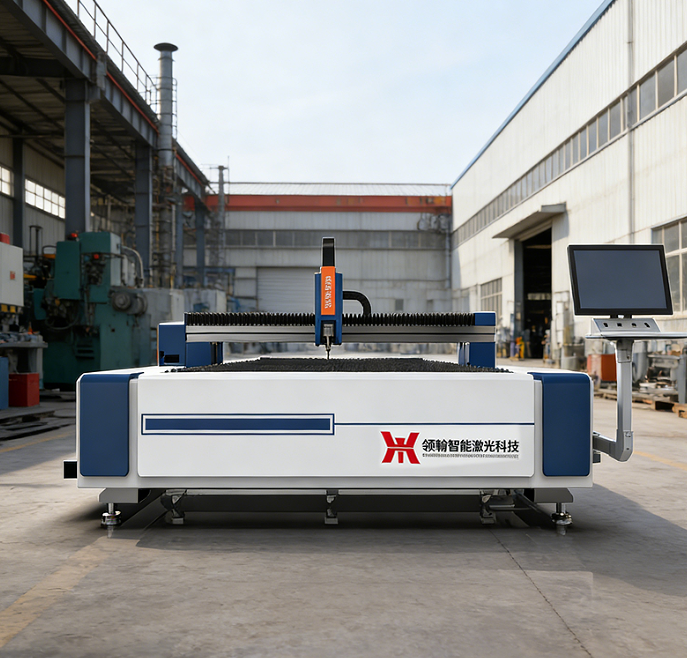
How CNC Laser Cutting Machines Work: Core Technology and Key Components
CNC (Computer Numerical Control) laser cutting machines transform digital designs into precise, contactless cuts using focused light energy. The process integrates photonics, motion control, and real-time feedback in four coordinated stages:
- Laser Generation: A resonator amplifies light within a lasing medium—CO� gas for non-metals or fiber-optic crystals for metals—to produce a coherent, high-intensity beam.
- Beam Focusing: Mirrors and precision lenses direct and concentrate the beam to a spot size under 0.1 mm, achieving power densities exceeding 1 MW/cm�.
- Material Interaction: The focused beam rapidly heats, melts, or vaporizes material along a programmed path; assist gases (e.g., nitrogen for clean inert cuts, oxygen for exothermic steel cutting) eject molten debris and stabilize the kerf.
- Motion Control: High-resolution servo motors move the cutting head or workpiece across X/Y/Z axes, guided by CNC instructions to maintain positional accuracy within �0.1 mm—even at speeds up to 30 m/min.
Critical Components
| Component | Function |
|---|---|
| Laser Resonator | Generates the coherent beam: CO� lasers dominate non-metal processing; fiber lasers are standard for reflective metals due to superior absorption and wall-plug efficiency. |
| Optics Assembly | Focuses and steers the beam via reflective mirrors and aspheric lenses; requires periodic alignment and anti-reflective coatings to sustain beam quality. |
| Motion System | Combines linear guides, servo drives, and encoders to execute sub-micron positioning—critical for maintaining focus depth on warped or stacked materials. |
| Controller | Translates CAD/CAM files into optimized G-code trajectories, incorporating adaptive algorithms for pierce timing, corner deceleration, and gas pressure modulation. |
| Worktable | Features vacuum-assisted clamping or pin-grid fixtures to secure materials without distortion; often integrated with automatic pallet changers for unattended operation. |
This tightly synchronized architecture enables rapid, burr-free processing of metals, plastics, composites, and ceramics—eliminating mechanical tool wear and unlocking geometries impossible with punch presses or plasma systems. Automation ensures batch-to-batch consistency, reducing per-part costs by up to 40% versus waterjet or plasma alternatives while improving material utilization by 8–12%.
Critical Selection Criteria for Industrial CNC Laser Cutting Machines
Selecting a CNC laser cutting machine demands rigorous technical alignment—not just budget considerations. The right system directly governs throughput, part quality, and long-term operational economics. Prioritize these interdependent criteria to ensure optimal ROI and scalability.
Laser Source Type (CO� vs. Fiber) and Material Compatibility
What kind of laser we're talking about really determines what can be produced. CO2 lasers work great on stuff like acrylics, wood, rubber, and fabrics because their wavelength range (around 9.4 to 10.6 microns) gets absorbed well by these materials. That makes them perfect for things such as signs, seals, and building components. Fiber lasers though? They absolutely crush CO2 when it comes to metal work. These babies can punch through material three times quicker than traditional models while using roughly 30 percent less power. Mild steel up to 25mm thick becomes no problem at all with clean edges and almost no leftover residue. The tricky part comes with metals like copper and brass which tend to bounce back CO2 laser light. Only high powered fiber systems around the kilowatt level handle these reflective materials reliably. Before jumping into any project, check how well different materials respond to specific laser types based on their thickness and surface properties. Getting this wrong means dealing with uneven results, lots of waste material, or worse yet, having to start over from scratch.
Power Rating, Bed Size, and Precision Tolerance Requirements
Power must match application needs—not maximum theoretical capacity. As a rule of thumb:
- 1–3 kW systems efficiently cut stainless steel up to 10 mm and aluminum up to 8 mm at speeds up to 30 m/min—ideal for electronics enclosures and thin-gauge automotive brackets.
- 6 kW+ systems handle structural-grade mild steel (25+ mm), titanium, and multi-layer stacks required in heavy equipment and aerospace, though they demand robust cooling and higher electrical infrastructure.
When choosing bed size, focus on what gets processed most often rather than those occasional big jobs that come along once in a blue moon. Going too big just takes up space, burns through more power, and makes maintenance headaches worse without really paying off. For precision work, three things matter most: solid mechanical build, good temperature control throughout the machine, and reliable motion systems that can track accurately over time. Industries where exact measurements count, like making parts for medical devices, usually need machines capable of keeping within about 50 microns of their target position repeatedly. These days, many high end systems come equipped with adaptive focusing heads that automatically adjust themselves based on how thick or warped the material happens to be at any given moment. This feature cuts down significantly on the manual grinding and cleaning work needed after cutting, saving roughly $14 each hour spent on individual units according to a recent report from Fabrication Today in 2024.
Top Industrial Applications of CNC Laser Cutting Machines
Automotive and Aerospace Sheet Metal Fabrication
CNC laser cutting makes a big difference in automotive manufacturing by producing lightweight body panels, structural reinforcements, and exhaust flanges while keeping heat distortion to a minimum. This helps maintain both tensile strength and weldability in these components. The aerospace industry has adopted high power fiber lasers extensively for working with challenging materials like titanium alloys, Inconel, and carbon fiber reinforced plastics. These lasers are used to create critical parts such as wing ribs, engine mounts, and various airframe components. When manufacturers achieve tolerances around plus or minus 0.1 mm, they can skip secondary machining processes altogether. This cuts down on assembly times significantly compared to traditional methods like milling or water jetting sometimes by as much as 60%. Since there's no physical contact between tool and material during laser cutting, there's absolutely no tool induced stress. This is especially important when making safety critical parts that must meet strict AS9100 certification requirements for fatigue resistance.
Electronics Enclosures and Precision Metal Parts
CNC laser cutting has become a go-to solution for electronics makers needing precision components like enclosures that fit within tight tolerances, EMI/RFI shielding, flexible circuit boards, and protective cases for sensors. These systems handle materials ranging from 0.2 to 3 mm thick including copper, aluminum, and various grades of stainless steel. What sets them apart is the clean finish they produce with absolutely no burrs, micro cracks, or heat distortion. This matters a lot when manufacturing parts that need to maintain their shape and seal integrity, whether it's for smartphones that must meet IP67 standards or delicate medical imaging equipment. The extremely narrow cut width, sometimes down to just 0.15 mm, allows engineers to create complex ventilation designs and precisely placed ports without weakening the overall structure. When compared against traditional stamping methods, laser cutting cuts down on finishing work by around 45%, which saves money and time during product development cycles. Plus, there's no need to invest in new tooling every time a design gets tweaked during prototyping stages.
Operational Advantages Over Traditional Cutting Methods
Speed, Repeatability, and Reduced Tooling Costs
Laser cutting with CNC machines can be as much as ten times quicker compared to old school methods like sawing, punching, or milling, particularly when dealing with intricate shapes or limited production runs. What makes this technology stand out is that there's no need to swap around physical tools during operation. Shop workers simply upload one digital design file and let the machine work its magic without interruption, which means factories can actually run overnight without anyone onsite. The precision level here is pretty amazing too, staying within about 0.1 millimeter accuracy over thousands of pieces. This kind of consistency matters a lot for car manufacturers needing just-in-time parts delivery and medical equipment makers who must track every component they produce. Another big plus? No wearing down of cutting tools at all. According to industry reports, companies spend between 60 to 80 percent less on tooling costs compared to those using punch presses or plasma cutting tables, plus almost no downtime exists between different jobs. When we look at material waste reduction as well, laser nesting software usually cuts scrap rates below 2%, whereas traditional cutting layouts tend to leave behind 5% to 10% waste. These savings really add up fast when running large production batches.
Minimal Heat-Affected Zone and Post-Processing Savings
Fiber lasers focus the heat into a really tight area, usually less than half a millimeter next to where the actual cut happens. This means there's much less chance of changing how metals react when heated, so things like sheet metal thinner than 1 mm won't warp during cutting, and plastic materials don't end up charred around the edges. When parts come out of the machine they're basically ready to go straight into welding or assembly work, saving companies anywhere from 15 to maybe even 30 percent of time that would normally get eaten up by grinding down rough spots or doing all sorts of surface treatments. Since it doesn't touch the material physically, there's no mechanical stress involved either, which makes all the difference when working with fragile stuff like ceramic components or those delicate sapphire wafers used in electronics manufacturing without creating tiny cracks we can't see. All told, these improvements cut down on the need for extra hands doing cleanup work by roughly 40 percent, which speeds up return on investment while letting experienced workers tackle more meaningful projects instead of just fixing mistakes made earlier in production.
Maintenance, Safety, and ROI Considerations for Buyers
When making smart purchasing choices, looking at the total cost over time matters far more than what's printed on the price tag. Maintenance shouldn't be an afterthought at all. Regular cleaning of those optical components, keeping motion systems properly calibrated, and checking how assist gases are delivered can save businesses from expensive shutdowns later on. Research shows that fixing problems after they happen typically costs anywhere from three to five times what regular maintenance would have cost instead. And let's not forget about alignment issues either. Even small misalignments during operation will gradually reduce cutting quality while also eating through consumables faster than expected.
Safety must be engineered-in, not retrofitted. Look for Class-1 fully enclosed systems with dual-channel emergency stops, interlocked access doors, and fume extraction compliant with ANSI Z9.2 and ISO 12100 standards. Integrated laser safety curtains and real-time beam monitoring further mitigate exposure risks during setup or maintenance.
For accurate ROI modeling, factor in three pillars:
- Energy efficiency: The wall insertion efficiency of modern fiber lasers is about 35-40%, almost twice that of CO systems - saving measurable kilowatt hours and operating for over 8000 hours per year.
- Material yield: Advanced nesting software and narrow kerfs improve utilization by 8–12%, directly boosting margin on high-value alloys.
- Labor optimization: Reduced post-processing, no tool changeovers, and automated pallet handling cut direct labor per part by 25–35%.
Manufacturers adopting predictive maintenance—using vibration sensors, thermal imaging, and controller analytics—report 20–25% higher annual ROI through extended component life, sustained beam quality, and fewer unplanned stoppages.
Table of Contents
- How CNC Laser Cutting Machines Work: Core Technology and Key Components
- Critical Selection Criteria for Industrial CNC Laser Cutting Machines
- Top Industrial Applications of CNC Laser Cutting Machines
- Operational Advantages Over Traditional Cutting Methods
- Maintenance, Safety, and ROI Considerations for Buyers