
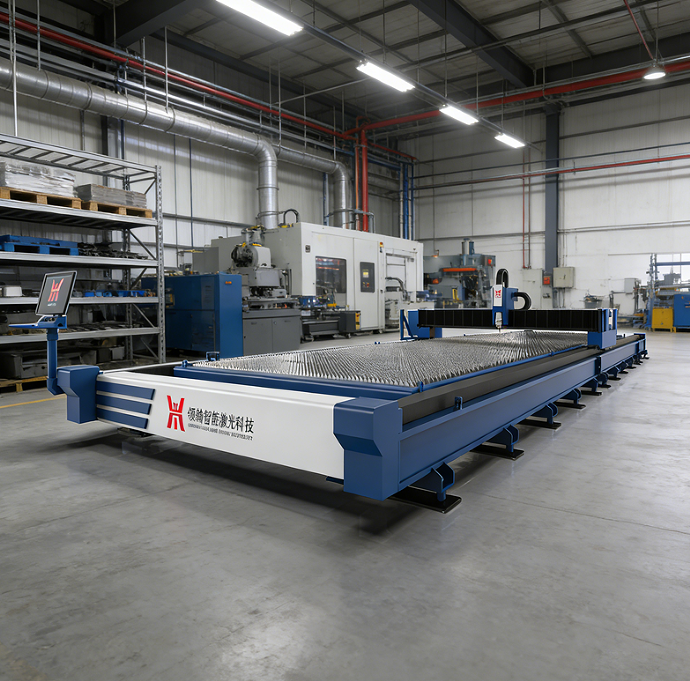
Fiber Laser Cutting Machine Thickness Limits: From Theory to Real-World Capability
How ultra-high-power fiber lasers (12–30 kW) redefined thick-plate cutting
These days fiber laser cutting machines can handle plates thicker than 30 mm pretty reliably, and this is made possible by those super powerful 12 to 30 kW laser sources available now. When we look at specific numbers, machines operating at 30 kW can cut through carbon steel plates as thick as 80 mm and stainless steel up to around 70 mm. This capability means many manufacturers no longer need to rely on plasma cutting or oxy-fuel methods for making structural parts. What makes this possible isn't just brute force power alone. The improvements come from better beam quality, smarter thermal management systems, and how efficiently the energy gets delivered to the material being cut. Take for instance the difference between 30 kW and 15 kW systems when working with 25 mm carbon steel plates. The higher powered version completes the job about 40 percent faster. And tests in actual manufacturing environments show these systems maintain a steady cutting speed of 0.8 meters per minute even on 40 mm thick plates when using nitrogen as an assist gas during the process.
Physics foundation: Power density, beam quality (BPP), and material thermal properties
Getting good results when cutting thick plates really depends on maintaining enough power density, measured in watts per unit spot area, which comes down to having a low Beam Parameter Product (BPP). When we talk about beam quality below 2.5 mm·mrad, this helps keep the laser focused deeper into the material, so edges stay square even past the 30 mm mark. For carbon steel work, adding oxygen creates those helpful exothermic reactions that make cutting easier. Stainless steel tells a different story though it needs clean nitrogen to prevent all that pesky slag buildup and deal with its reflective nature. Aluminum poses another challenge because it conducts heat so well, meaning most shops struggle to cut beyond around 35 mm thickness even with 30 kW machines running full tilt. What happens during the melting process matters too phase changes mess with how much energy gets absorbed, creating heat affected zones (HAZ) that can reach about 1.5 mm in depth for 50 mm stainless steel parts. This means operators need to balance both temperature management and optical settings carefully to get consistent cuts.
Material-Specific Performance of Fiber Laser Cutting Machine for Plates ≥30mm
Carbon steel: Up to 80 mm at 30 kW – leveraging exothermic oxidation
When it comes to carbon steel, the maximum thickness that can be cut is around 80 mm when using a 30 kW system, thanks to the process of exothermic oxidation. The technique involves oxygen assistance which starts a kind of continuous heat reaction. What makes this interesting is that actually the metal itself gives off some energy during the process, so we don't need as much power from the laser alone. Because of this effect, operators typically get pretty steady cutting rates between 0.3 and 0.8 meters per minute. Another bonus is there's not much dross left behind after cutting. This matters a lot for making structural components since they often don't require much cleanup work afterwards, saving time and money on finishing processes.
Stainless steel & aluminum: 70 mm and ~35 mm ceilings – reflectivity and slag challenges
When working with stainless steel, there's basically a limit around 70 mm thickness before problems start showing up. The material forms chromium oxide layers and loses reflectivity beyond about 40%, which means operators need to carefully control nitrogen pressure levels and significantly slow down the cutting process. At 50 mm thickness for instance, speeds drop to just 0.2 meters per minute to keep edges intact. Aluminum presents different challenges altogether. Its high thermal diffusivity combined with how easily molten slag sticks makes reliable cuts difficult past roughly 35 mm, even when running machines at full power like 30 kW. Anyone who has worked with these materials knows that trying to push through these limits usually ends badly. There's always going to be compromises needed between how fast something gets done, the quality of those edges, and dealing with leftover dross unless we bring in extra finishing steps later on.
Critical Cutting Parameters for Reliable ≥30mm Processing on Fiber Laser Cutting Machine
Assist Gas Strategy: Oxygen vs. Nitrogen Pressure, Purity, and Flow Dynamics
Choosing the right gas makes all the difference when working with thick plates. Pure oxygen (over 99.5%) works great for carbon steel because it creates those helpful exothermic reactions, though it does come with higher oxidation risks. Stainless steel needs nitrogen at pressures above 25 bar to get those clean edges free from oxides, but aluminum gives everyone headaches because of its reflective nature. Keeping the gas flowing laminar helps maintain stable cuts and reduces variations in bevel angles. When things get turbulent, the molten material just doesn't eject properly. Manufacturers who follow industry tested gas setups see around 40% less dross sticking to their workpieces compared to what happens with standard factory defaults. This kind of precision matters a lot in production environments where consistency counts.
Speed, Focal Position, and Pulse Modulation to Control Dross and Bevel Angle
Three interdependent parameters govern cut quality in thick sections:
- Cutting speed must remain ≥0.8 m/min for 30 mm carbon steel to ensure full melt expulsion;
- Focal position is typically set at 1/3 depth into the material to maximize energy density at the kerf base;
- Pulse modulation, with peak power >2× average power, reduces HAZ by 30% and stabilizes the cutting front.
Deviations significantly impact results: insufficient modulation increases dross adhesion by 60%; incorrect focal placement widens kerf taper beyond 5°–both raising post-processing costs.
Practical Constraints and Trade-Offs in Industrial Thick-Plate Fiber Laser Cutting
Piercing stability vs. edge quality: The power paradox in >30mm applications
Using high power levels around 20 to 30 kW definitely gets the job done when piercing through thick steel plates over 40 mm, but there's a downside too. All that extra power creates more heat, which leads to problems like oxidation on the metal surfaces and uneven edges after cutting. Most experienced operators will actually dial back the power setting by about 15 to 20 percent once they start working with 45 mm carbon steel. This helps maintain straight cuts and keeps the finished surface looking good. Even with pulse modulation techniques to control the heat, we still find ourselves dealing with surface roughness measurements above 25 Ra unless we do some post-cutting grinding work. There's just no getting around the tradeoff between having a reliable cutting process and achieving those perfect finish standards everyone wants.
Heat-affected zone (HAZ), kerf taper, and post-processing implications
Thick-plate laser cutting introduces persistent thermal effects that affect downstream operations:
- HAZ depth reaches up to 1.5 mm in 50 mm stainless steel, potentially altering mechanical properties near the cut edge;
- Kerf taper ranges from 2–5°, requiring software compensation and limiting fit-up precision in assemblies;
- Dross adhesion can exceed 0.3 mm in the lower third of cuts, especially in stainless and aluminum.
Processing times inevitably go up when dealing with these challenges. Grinding those kerf surfaces typically eats away 15 to 25 percent of the overall cycle time. And don't forget about stress relief annealing which often becomes necessary just to prevent parts from warping after machining. Even when shops employ advanced techniques like dynamic focal tracking or switch gases during different stages, there's still no getting around those pesky thermal stresses in anything thicker than 40 mm material. That's why so many fabrication shops stick with their old fashioned approach of combining laser cutting for initial shapes followed by traditional machining for final touches on structural components.
Table of Contents
- Fiber Laser Cutting Machine Thickness Limits: From Theory to Real-World Capability
- Material-Specific Performance of Fiber Laser Cutting Machine for Plates ≥30mm
- Critical Cutting Parameters for Reliable ≥30mm Processing on Fiber Laser Cutting Machine
- Practical Constraints and Trade-Offs in Industrial Thick-Plate Fiber Laser Cutting