
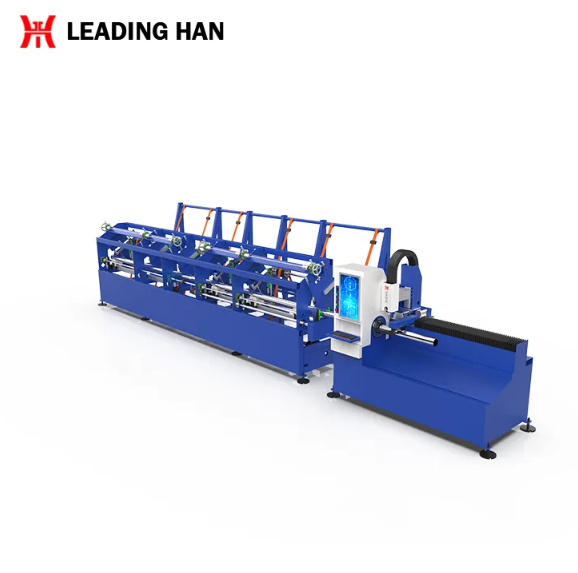
High-Precision Manufacturing Applications for CNC Fiber Laser Cutting Machine
Aerospace & Defense: Micron-Tolerance Cutting of Titanium and Inconel Alloys
CNC fiber laser cutting machines can achieve incredible precision at the micron level, which is absolutely necessary for those critical parts used in aircraft manufacturing. These machines regularly hit tolerances below 0.1 mm when working with tough materials like titanium and Inconel alloys. Such high accuracy matters a lot for things like turbine blades, sections of airplane frames, and housing units for avionics equipment. After all, even small dimensional changes can affect how well these components perform and whether they're safe to use. What makes this technology stand out is its non-contact nature combined with minimal heat input during cutting. This approach helps reduce residual stresses and prevents unwanted distortion in the final product. As a result, manufacturers find it much easier to meet strict industry standards such as AS9100 certification and FAA Part 21 regulations.
Medical Device Fabrication: Biocompatible Parts from 316L Stainless Steel and Nitinol
Fiber lasers make it possible to cut biocompatible materials without introducing contaminants. Materials like 316L stainless steel and nitinol get cut with exceptional precision, which is really important when manufacturing things like surgical tools, bone implants, and heart stents. Since there's no physical contact between the laser and material during cutting, both the microscopic structure and surface quality stay intact. Most of the time, this means manufacturers don't have to spend extra time cleaning or treating the parts after cutting. The consistent results from fiber lasers also help companies meet those strict medical device standards set by organizations like ISO 13485 and the FDA requirements for product design controls.
Electronics & Semiconductors: Kerf Control Under 20 µm for Shields, Heat Sinks, and Flex Circuits
For electronics manufacturing these days, getting kerf widths below 20 microns just isn't optional when making those dense EMI shields, copper heat sinks, or flexible printed circuits. Fiber lasers make it happen thanks to their super focused beams and those fast pulse controls. This keeps the heat damage area small and stops problems like substrate peeling or circuit traces warping during cutting. What we end up with are clean edges that work great for soldering, plating processes, and putting everything together properly. Pretty much essential stuff for today's tiny consumer gadgets and those complex semiconductor packages that pack so much functionality into such small spaces.
High-Volume Production Use Cases for CNC Fiber Laser Cutting Machine
Automotive Tier-1 Suppliers: Rapid, Repeatable Cutting of Mild Steel and AHSS Body Panels
CNC fiber lasers have become pretty much standard equipment on Tier-1 automotive production lines these days. They work just fine with both regular mild steel and those tougher Advanced High-Strength Steels (AHSS). The real kicker is how fast these machines can slice through body panels at over 30 meters per minute while still keeping within about 0.1 mm tolerance even when running thousands of units straight through. When we look at alternatives like mechanical punching or plasma cutting methods, there's no contest really. Fiber lasers cut down on material waste by around half compared to those older techniques. Plus they get rid of all that extra deburring work which saves loads of time during assembly for parts like chassis reinforcements, door beams, and various structural brackets. And best part? All this happens without messing up crash test ratings either.
Heavy Machinery & Construction: Efficient Cutting of Structural Steel Up to 25 mm Thickness
Fiber lasers rated at 6 kW and above really boost productivity and cut quality in heavy duty fabrication work. Take 25 mm carbon steel cutting for instance these lasers beat plasma systems by about a quarter in terms of cycle time while delivering clean cuts with no dross and straight edges that don't need any post processing. The reduced need for nitrogen or oxygen plus better electricity usage means parts typically cost around 30 percent less to make. For industries making things like mining machine frames, cranes booms, and various construction gear components, this matters a lot since accurate dimensions and ready to weld surfaces are what keep structures safe and reliable in real world conditions.
Emerging and Specialized Applications of CNC Fiber Laser Cutting Machine
Renewable Energy Infrastructure: Optimized Cutting of Aluminum Solar Mounts and Galvanized Wind Brackets
The CNC fiber laser cutting technology really helps speed things up when building out renewable energy infrastructure because it lets factories produce corrosion resistant parts with amazing precision and throughput. Take solar panels for instance. These machines can cut those aluminum mounting systems down to within 0.1 mm accuracy which means way less waste material lying around and everything fits together nicely with the tracking systems. Wind farms benefit too. The lasers handle galvanized steel brackets as thick as 20 mm at speeds around 15 meters per minute without messing up the protective zinc coating something traditional thermal methods tend to do. This kind of efficiency is why so many manufacturers are ramping up production right now. After all, we're talking about hitting those big numbers set by organizations like the International Energy Agency who predict we'll need 2.4 terawatts of new green power installed worldwide by 2030.
Jewelry, Art, and Microfabrication: Sub-0.1 mm Detail on Precious Metals and Thin Foils
Pulsed fiber lasers can create incredibly narrow cuts, sometimes just 20 to 50 micrometers wide, with pulses as short as 100 nanoseconds. This opens up amazing possibilities for working with precious metals and super thin materials. Jewelers are now able to get about 100 microns of accuracy when making intricate platinum designs. Artists work with gold foil that's only 0.05 mm thick, cutting delicate patterns that look like lace without causing any heat-related distortion. According to a recent study published in the Goldsmiths' Journal last year, these laser techniques cut down on wasted precious metal by around 22% compared to traditional methods like stamping or milling. What makes this technology really valuable though goes beyond just looks. The same precision allows for tiny engravings on medical tools and those super close together connections needed in electronics manufacturing. These capabilities show why so many different industries keep finding new ways to apply this technology where extremely small details matter.
FAQ
What industries benefit from CNC fiber laser cutting machines?
Industries such as aerospace, defense, medical device manufacturing, electronics, automotive, construction, renewable energy, and jewelry benefit greatly from CNC fiber laser cutting due to its precision, efficiency, and capabilities in handling diverse materials.
How does CNC fiber laser cutting enhance medical device production?
CNC fiber laser cutting enhances medical device production by precisely cutting biocompatible materials like 316L stainless steel and nitinol, maintaining the material's microscopic structure and surface quality, thus reducing the need for post-processing treatments and meeting stringent medical standards.
Why is CNC fiber laser cutting preferred in automotive production?
In automotive production, CNC fiber laser cutting is favored for its speed, reduced material waste, and high precision, allowing rapid and repeatable cuts on mild steel and AHSS body panels, thereby streamlining production and improving overall efficiency.
What advantages do CNC fiber lasers offer for renewable energy manufacturing?
For renewable energy manufacturing, CNC fiber lasers provide precision cutting of aluminum solar mounts and galvanized wind brackets, enhancing efficiency and material utilization, thus supporting increased production to meet growing energy demands.