
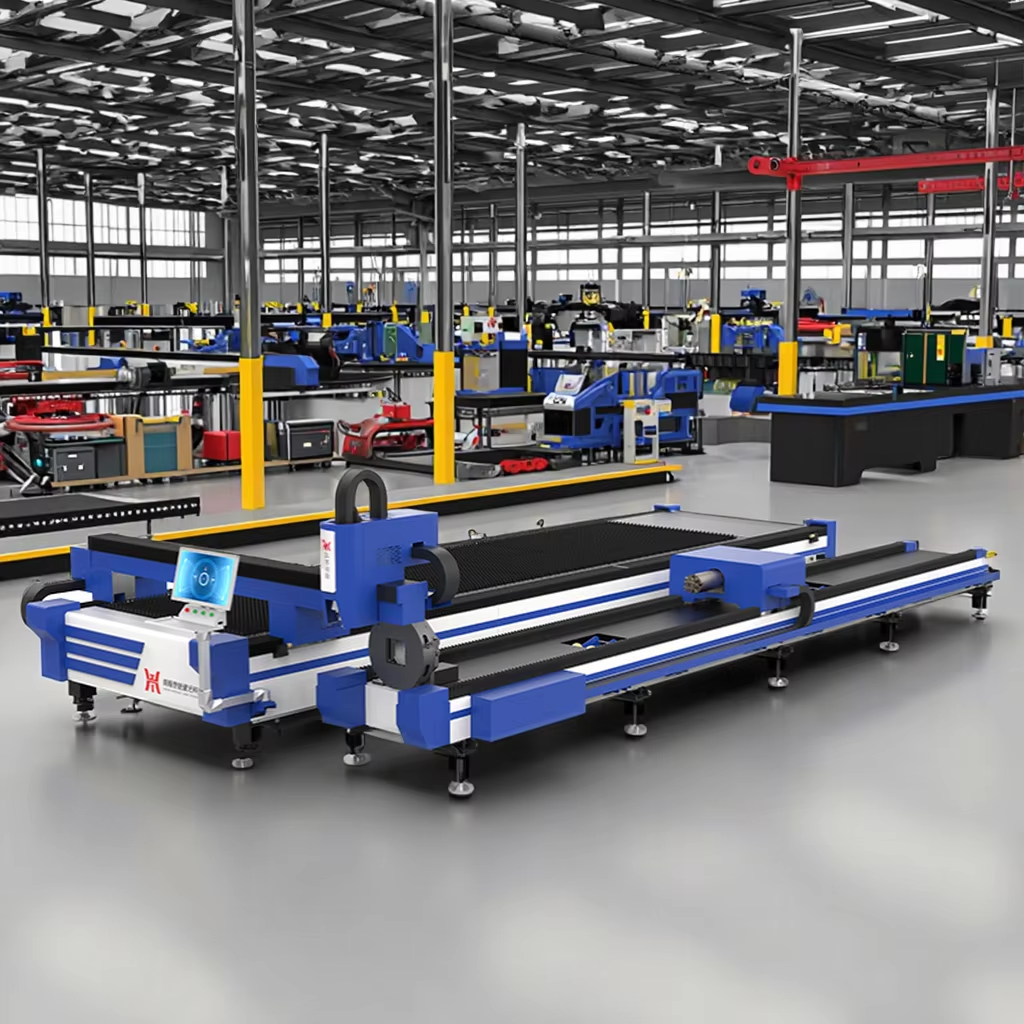
Material and Geometric Versatility of Tube and Plate Laser Cutting Machines
Broad Material Compatibility: Mild Steel, Stainless Steel, Aluminum, and Aerospace Alloys
Tube and plate laser cutting machines offer incredible flexibility when it comes to working with different materials. These systems handle everything from mild steel used in building structures to stainless steel needed for parts that resist corrosion, all while maintaining consistent quality. When dealing with non-ferrous metals such as aluminum commonly found in lightweight frames, cuts come out clean without warping caused by heat. For aerospace applications involving tough materials like titanium and Inconel, the controlled heat application preserves the metal's properties so there's no need for extra work to remove burrs after cutting. Many shops find they can combine several material processing lines into a single system, which cuts down on capital expenditures significantly over time. What makes these machines stand out is their ability to adjust both wavelength and power levels automatically as materials change, delivering fast cuts with good edges regardless of what kind of metal is being worked on.
Dual-Geometry Mastery: Precision Cutting of Flat Sheets, Round/Circular Tubes, and Multi-Axis Profiles
The systems handle everything from simple flat surfaces to really complicated shapes without missing a beat. When working with flat sheets, they can cut out detailed brackets or panels with tolerances as tight as plus or minus 0.05 mm. At the same time, the machine's rotating feature takes care of all sorts of tubes - round ones, square ones, even rectangular ones used in building structures. What makes these machines stand out is their ability to do angled cuts, create slots, and punch holes right on curved surfaces without needing to move parts around. The special lenses automatically adjust so the laser stays focused whether it's working on flat material or something with curves. This kind of versatility means shops can go from making prototypes straight into full production runs. With just one setup, different part types get processed together, which cuts down on mistakes during handling by about 30%. Complex pieces that would normally take multiple operations now come out finished in just one pass through the machine.
Precision Performance Across Flat and Curved Surfaces
Consistent Sub-0.1 mm Tolerances on Both Plates and Tubes
Today's advanced laser cutters for tubes and plates can hold tight tolerances below plus or minus 0.05 mm even when working with different materials and complex shapes. The machines achieve this level of precision thanks to their solid build quality and special thermal compensation features that help prevent warping issues. When cutting round tubes, the system keeps everything aligned properly through synchronized rotation axes, which matters a lot at higher speeds. Flat sheet work benefits from linear motor technology that basically removes any play in the movement. All this reliability cuts down on wasted material and fixes needed after cutting, probably around 30% less according to shop floor experience. Manufacturers find these improvements particularly valuable when putting together complicated structures or fluid handling components where parts need to fit together perfectly right out of the machine.
Adaptive Focusing Technology for Stable Beam Delivery on Planar and Cylindrical Workpieces
When working with curved surfaces, the laser needs to constantly adjust its beam focus. The collimator lenses do this automatically by changing the focal length as the laser moves along the tube's shape, keeping the energy just right for cutting. With flat sheets, things work differently. Capacitive sensors monitor how level the material actually is while cutting happens. This combination of systems stops the laser from getting out of focus, which matters a lot when dealing with those thin walls in aerospace parts. Just a tiny angle change of plus or minus 0.1 degrees could lead to failed joints in these applications. What we end up seeing are consistently narrow cuts measuring less than 0.15 millimeters wide. This works whether it's a long 6 meter stainless steel tube or something like a 25 mm thick aluminum plate.
High-Value Industrial Applications of Tube and Plate Laser Cutting Machines
Automotive & Architectural Fabrication: Rapid Prototyping and Custom Bracket Production
Tube and plate laser cutting machines are really pushing forward what's possible in car manufacturing these days. They let engineers quickly make prototypes for things like car frames and exhaust systems that would take weeks otherwise. What makes these machines special is their ability to work with both mild steel and aluminum, which opens up all sorts of possibilities. We're seeing them used not just in cars but also for creating custom brackets and even architectural features such as decorative stair railings or support structures on building facades. The automation built into these systems means they can run non-stop throughout the day and night, churning out complicated exhaust parts with measurements accurate within about 0.1 millimeters. This kind of precision cuts down waiting periods by around 40% when compared to older techniques. Architects have started adopting this tech too because it allows them to craft intricate designs that still hold up structurally without needing extra finishing work afterward.
Aerospace and Medical Device Manufacturing: Traceable, Burr-Free Cuts in Titanium and Stainless Tubing
These machines are essential tools for aerospace engineers who need to cut titanium parts for landing gears and hydraulic tubing without any thermal distortion issues. For medical device manufacturers, they produce FDA approved cuts on stainless steel surgical instruments that come out completely smooth and free from burrs, which means no extra finishing work is needed afterward. The system has a built-in monitoring feature that keeps track of all cutting parameters, ensuring complete traceability that satisfies AS9100 standards. What's really exciting now is the latest improvements allowing clean cuts through nickel alloys as thick as 15mm, and doing it about 20 percent quicker compared to traditional approaches. This kind of performance boost makes a big difference in production timelines and quality control across multiple industries.
Operational Efficiency Gains: Automation, Waste Reduction, and Workflow Unification
Single-Machine Workflow Integration Eliminates Secondary Handling and Alignment Errors
When manufacturers combine tube and plate cutting into one machine setup, it completely changes how fabrication shops operate because they no longer need to move parts between different machines. Old fashioned methods that used separate equipment for flat metal sheets and round tubes created all sorts of problems during transfers. Every time a part gets moved from one station to another, small alignment issues build up somewhere around half a millimeter to over a millimeter total. Consolidating everything into a single operation means getting rid of those middle steps altogether. Modern laser cutting systems can handle both flat plates and round tubes while keeping them fixed in place, which maintains super tight tolerances under 0.1 mm without having to adjust positions again. Shops report seeing about two thirds fewer errors when moving materials around, faster production since there's less downtime between cuts, and significantly less wasted material from misaligned parts. This makes a big difference for complicated builds such as car suspension brackets or building support frames where the flat metal pieces need to fit precisely against curved tubing sections. With everything done in one go, fabricators get clean edges and accurate dimensions across the whole assembly without needing multiple setups.
FAQ
What materials can tube and plate laser cutting machines work with?
These machines can handle a wide range of materials including mild steel, stainless steel, aluminum, titanium, Inconel, and other aerospace alloys.
How precise are the cuts made by these machines?
Tube and plate laser cutting machines offer high precision with tolerances as tight as plus or minus 0.05 mm.
What are some industrial applications of these machines?
They are used in automotive and architectural fabrication for rapid prototyping and custom bracket production, as well as in aerospace and medical device manufacturing for producing traceable, burr-free cuts.
How do these machines improve operational efficiency?
They integrate both tube and plate cutting into a single setup, reducing the need for secondary handling and alignment errors, and thus improving workflow and reducing material waste.